

Learn the Monterey Phoenix Modeling Framework
Used to examine how complex systems behave in real-world environments

Every day, systems behave in ways that weren’t fully anticipated.
Some of those situations make headlines.
Others stay internal—but still create serious risk, disruption, or cost.
These aren’t always caused by something breaking.
They often come from:
- paths that were never traced
- conditions that were never considered together
- interactions that were never fully explored
Even in environments where experienced teams have already designed, reviewed, and tested the system, and even when all the rules are being followed.
Now consider this:
What if you were trained in a method designed to examine those kinds of situations—before they surface?
What if you could:
- follow paths others don’t trace
- test condition combinations others don’t think about
- and identify where gaps or exposure may exist
Not after the fact—but while the system is being examined and there is still time to prevent emergent failures in operation.
This gives you an advantage most individuals don’t have.
You’re learning and applying a method that is not widely taught—and in many cases, not widely known. That means you’re not starting from the same place.
You’re entering with a perspective and capability that others haven’t been trained to use.
What you’ll be doing:
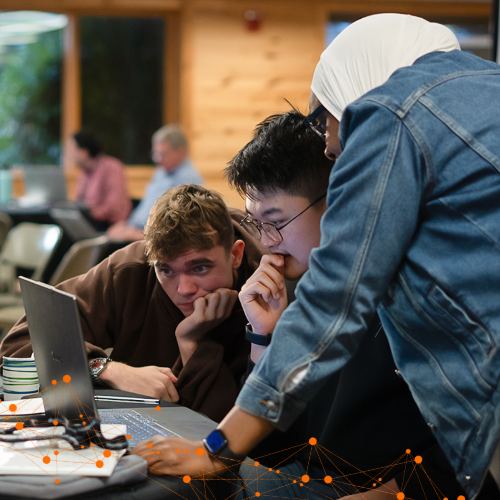
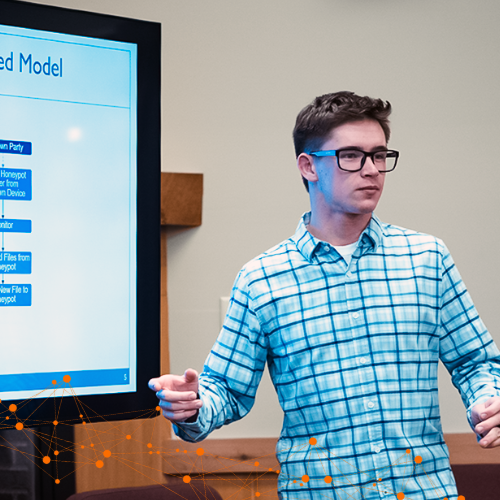
Hands-on, applied work tied to real problems
You will:
- Work on systems and scenarios brought in by organizations
- Model how those systems behave using the Monterey Phoenix approach
- Explore how different conditions produce different outcomes
- Surface interactions and behaviors that are not immediately visible
This work is not hypothetical. It is connected to real environments and real questions.
What you gain from this work:
A capability that goes beyond traditional education
Real, sponsor-relevant problems
Experience working on problems that matter to real organizations—not textbook exercises.
Organizational exposure
See how organizations approach system risk and decision-making close-up.
Structured modeling ability
Develop the ability to model and examine system behavior in a structured, repeatable way.
Meaningful findings
Experience surfacing findings that are relevant in real-world contexts.
In many cases, students uncover behaviors and scenario variants that are relevant to the organizations involved—sometimes validating known concerns, and sometimes surfacing new ones.
You are not just learning. You are contributing to the work.
Work alongside the organizations that
need this capability
This work is often carried out in collaboration with organizations that bring real systems, questions, and concerns into the environment.
This creates visibility into how this work is used in practice—and provides exposure to organizations that need this capability.
For some participants, this becomes a pathway into continued work within the organization or future opportunities.
There are different ways to take part in this work—through workshops, bootcamps, or internships.
The format varies, but the experience is consistent.
You’re stepping into real scenarios connected to organizations that are actively examining their systems.
Who this is for
A strong fit for individuals entering or building capability in fields such as cybersecurity, computer science, IT, engineering, or related areas who:
Want to enter or advance in the workforce with a stronger starting point
Want hands-on experience beyond the tools and approaches typically covered in traditional pathways
This includes individuals coming from traditional academic programs, vocational pathways, or non-linear routes into the field.
If you’re interested in developing this capability and working on real-world systems, the next step is to explore available programs.